
COSMETIC
RESTORATIVE
ADVANCED
GENERAL
Why Invisalign From a Dual-Trained Orthodontist and Cosmetic Dentist is the Best Choice
When patients are deciding where to begin Invisalign treatment, the conversation often centers on one question:
Should I choose an orthodontic-only practice, or a provider who is trained in both orthodontics and cosmetic dentistry?
For many patients—including those with significant bite and skeletal issues—the evidence increasingly supports the latter. Practices built around a holistic orthodontic and cosmetic model are uniquely positioned to deliver both functional correction and superior aesthetic outcomes.
This article explains why.
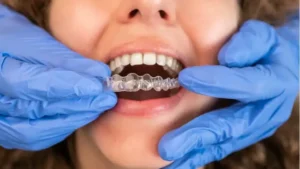
The Myth: Dual-Trained Providers Are Only for “Simple” Cases
A common misconception is that complex orthodontic problems—such as Class II, Class III, open bite, underbite, crossbite, or deep overbite—should be treated exclusively in orthodontic-only practices.
In reality, leading dual-trained providers such as Modern Smile Design (having over 30 years of experience) successfully treat hundreds of complex bite and skeletal cases, including Invisalign-based corrections that require advanced biomechanics, staging, and long-term stability planning.
The difference is not only in capability but in the philosophy, approach, and integration.
What “Holistic Orthodontic Care” Actually Means
A holistic orthodontic approach does not mean less technical rigor. In fact, it means broader clinical accountability across multiple aspects.
A dual-trained orthodontist and cosmetic dentist evaluates:
- Tooth position and angulation
- Skeletal relationships and bite mechanics
- Facial proportions and smile line
- Tooth shape, size, and symmetry
- Long-term functional stability
- Final aesthetic result
These elements are planned together, not sequentially and not by different providers with competing priorities.

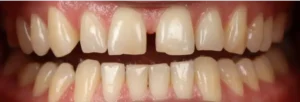

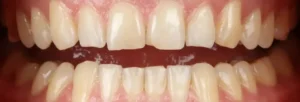
Why This Matters for Complex Bite and Skeletal Cases
At practices like Modern Smile Design, complex cases such as Class II, Class III, open bite, crossbite, and underbite are approached through comprehensive treatment planning, often involving:
- Advanced Invisalign staging and refinements
- Strategic use of attachments and elastics
- Integration of cosmetic principles into orthodontic mechanics
- Digital smile design to guide final tooth position
- Long-term retention strategies aligned with facial aesthetics
This approach recognizes a critical truth:
A bite can be technically “correct” and still be aesthetically suboptimal or unstable long term.
Invisalign Expertise Plus Orthodontic Depth
High-volume Invisalign experience matters, especially for complex cases. Providers who work extensively with Invisalign understand:
- Where aligners can predictably replace braces
- How to manage skeletal compensation with aligners
- When refinements are necessary and when they are not
- How to finish cases precisely, not approximately
When that Invisalign expertise is combined with formal orthodontic training and cosmetic dentistry mastery (as with Dr. Olga Dontsova), patients benefit from both technical precision and artistic judgment.
The Key Advantage: One Vision, One Doctor, One Outcome
In traditional care models, patients with complex needs are often treated by an orthodontist for alignment and bite, then a cosmetic dentist later for aesthetics. This fragmented approach can lead to compromises, frustration, and miscommunication.
In a holistic, dual-trained model:
- The same doctor plans bite correction and final smile
- Invisalign mechanics are guided by the desired aesthetic endpoint
- There is no handoff, no reinterpretation, and no conflict in priorities
This unified vision is especially powerful in Invisalign cases where function and appearance are equally important.
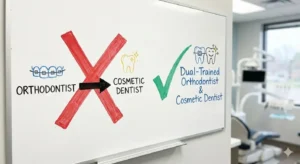
Why This Model Is Often the Better Choice Today
For patients with:
- Bite or skeletal discrepancies
- A desire to avoid braces when possible
- A strong emphasis on smile aesthetics
- Interest in Invisalign-based correction
- Expectations for both function and beauty
A dual-trained orthodontist and cosmetic dentist is the optimal choice.
Final Takeaway
The question is no longer whether dual-trained providers can treat complex orthodontic cases—practices such as Modern Smile Design demonstrably do. The more important question is whether your treatment should be planned in isolation or as part of a complete facial and smile strategy.
When orthodontics and cosmetic dentistry are integrated from day one, Invisalign becomes not just a tool for straightening teeth, but a platform for comprehensive, stable, and aesthetically superior outcomes.
For many patients, that holistic approach is exactly what makes the difference.