
COSMETIC
RESTORATIVE
ADVANCED
GENERAL
MODERN SMILE DESIGN
Root Canal Therapy
Saving the tooth you already have
A root canal removes infection from inside a tooth while keeping the tooth itself in place. Done well, it relieves pain and preserves your natural tooth, and the bone that supports it, for years to come. At Modern Smile Design, Dr. Dontsova approaches every root canal as a way to protect what your body already built rather than replace it.
01
What a Root Canal Actually Does
Inside every tooth is a soft core called the pulp, made up of nerves and blood vessels. When decay, a crack, or repeated dental work lets bacteria reach the pulp, it becomes inflamed or infected. That is what causes the deep, lingering pain most people associate with needing a root canal.
A root canal treats the problem at its source. Dr. Dontsova removes the infected pulp, cleans and shapes the narrow canals inside the root, disinfects the space, and seals it. The tooth stays exactly where it is. What changes is that the infection is gone and the pain goes with it.
The reputation root canals carry comes from an older era of dentistry. With modern technique and anesthesia, the experience for most patients is closer to having a filling placed than the ordeal people expect.
02
Anatomy of a Tooth
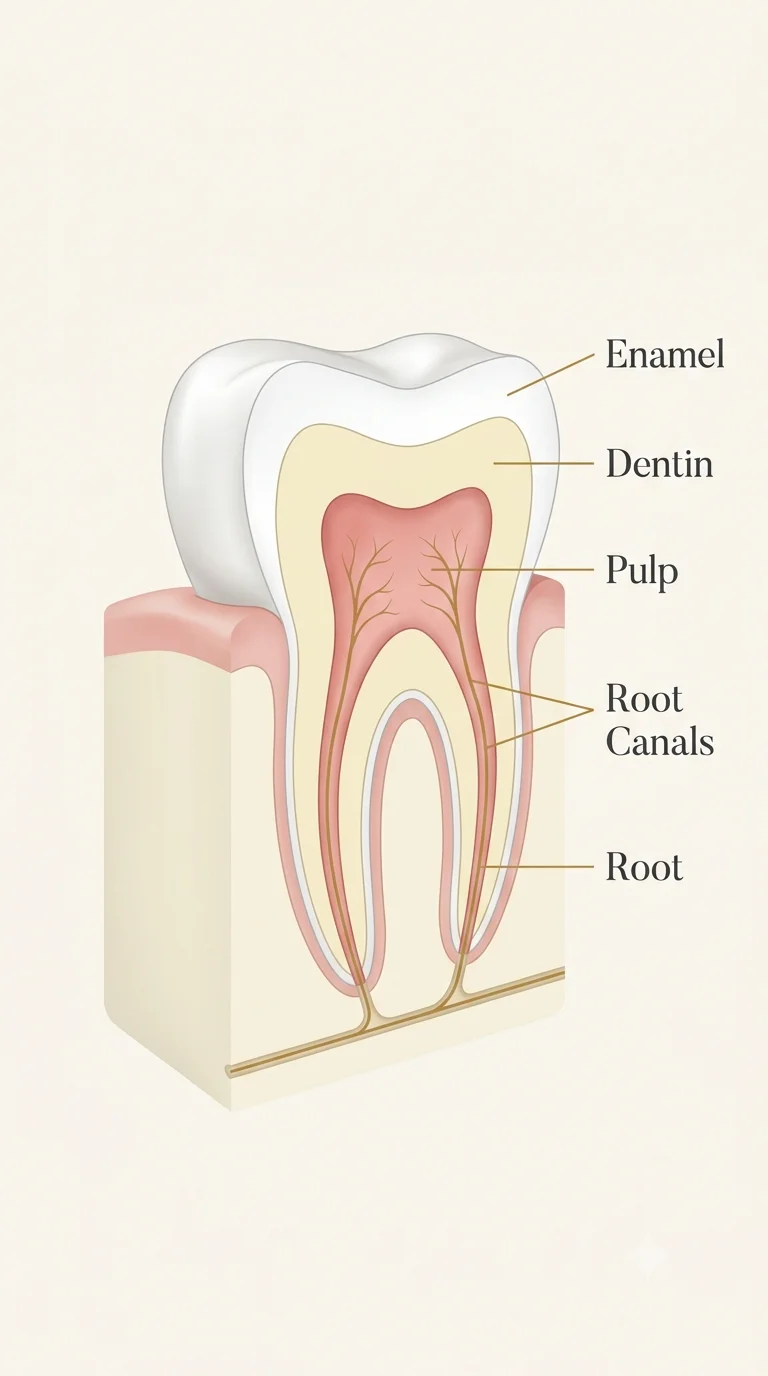
Understanding what is inside a tooth makes it clear why a root canal works, and why saving the tooth matters.
Enamel
The hard, white outer shell. It is the most durable tissue in the body, but once bacteria break through it, they can reach the layers beneath.
Dentin
The dense layer under the enamel. It carries tiny channels that lead inward, which is why a deep cavity can eventually reach the nerve.
Pulp
The living core of nerves and blood vessels. When this becomes infected, the tooth hurts. A root canal removes this tissue while leaving the tooth intact.
Root & Canals
The root anchors the tooth into the jawbone, and the canals are the narrow passages inside it. Keeping the root in place is what keeps the surrounding bone stimulated and healthy.
03
Signs You May Need Treatment
A root canal is often the difference between saving a tooth and losing it. These are the symptoms worth having evaluated sooner rather than later.
Not every symptom means a root canal is needed, and some infected teeth cause little pain at all. That is why evaluation matters. If you are experiencing any of these, Modern Smile Design can determine whether the tooth can be saved and what that would involve.
04
Saving the Tooth vs. Extraction
When a tooth is badly infected, there are two paths: treat it and keep it, or remove it. Understanding what each choice sets in motion is the most important part of the decision.
THE CONSERVATIVE CHOICE
Root Canal (Keep Your Tooth)
The infection is removed while the natural tooth stays in place. Because the root remains, it continues to stimulate the jawbone through everyday chewing, which is what keeps that bone dense and healthy.
A treated tooth is typically restored with a crown and can last for many years. Nothing has to be rebuilt, because nothing was removed.
No gap. No bone loss. No implant needed.
THE ALTERNATIVE
Extraction & Replacement
Removing the tooth ends the infection too, but it also removes the root that was keeping the bone stimulated. Without it, the jawbone in that spot begins to shrink.
The jawbone can lose up to 50% of its width in the first year after an extraction, with most of that happening in the first few months.
To rebuild the site for an implant later, a bone graft is often needed first. What began as one problem can turn into extraction, grafting, healing time, and an implant.
This is why Dr. Dontsova recommends saving a tooth whenever it can reasonably be saved. An implant is an excellent option when a tooth truly cannot be kept, but nothing replaces a healthy natural tooth as well as the tooth itself.
05
What to Expect During Treatment
Most root canals are completed comfortably in one or two visits, depending on the tooth. Here is how the appointment generally goes.
1
Numbing & comfort
The area is fully numbed before anything begins. Most patients feel pressure at most, not pain. Dr. Dontsova checks in throughout to keep you comfortable.
2
Removing the infection
A small opening is made in the top of the tooth so the infected pulp can be removed and the canals inside the root can be cleaned and shaped.
3
Disinfecting & sealing
The inside of the tooth is disinfected and then sealed to prevent bacteria from returning. This is the step that ends the infection for good.
4
Protecting the tooth
A treated tooth is usually finished with a crown to restore full strength. Dr. Dontsova will discuss timing, since some teeth are crowned at a follow-up visit.

06
Preparing for Your Procedure
There is very little you need to do to prepare for a root canal, and knowing what to expect tends to ease most of the anxiety people arrive with. The most useful thing you can do is eat a normal meal beforehand. Because the tooth and surrounding area will be numb for a few hours afterward, having eaten in advance means you will not need to manage food while part of your mouth is still asleep.
Take any medications you normally take unless Dr. Dontsova has told you otherwise. If you tend to feel anxious at dental appointments, mention it ahead of time rather than the day of. There are simple ways to make the visit more comfortable, and knowing in advance lets us plan for them.
If antibiotics were prescribed to bring down a significant infection before treatment, take the full course exactly as directed, even if the tooth starts to feel better before you finish.
Plan for the appointment itself to take an hour or two. Most people are able to return to their normal day afterward, though it is reasonable to keep the rest of the day light if you would prefer.
07
Post-Operative Care & Healing
Recovery from a root canal is usually straightforward. A little care in the first days, and support for your body's healing, helps everything settle smoothly.
The first few days
It is normal for the tooth and surrounding gum to feel tender for a few days, especially when chewing. This is the tissue around the tooth calming down, not a sign that anything is wrong. Over-the-counter pain relief is usually enough to stay comfortable, and any discomfort typically eases day by day.
Until the tooth is fully restored with its permanent crown, favor the other side of your mouth when you chew and avoid anything very hard or sticky on that tooth. Keep brushing and flossing normally, gently around the treated area.
Supporting your body's healing
Healing well is not only about the tooth. Giving your body what it needs to recover and to keep the bone around the tooth strong makes a real difference over time. During your visit, Dr. Dontsova may talk with you about simple, healthy ways to support recovery and long-term oral health.
That often includes everyday nutrition that supports bone and tissue health. Vitamin D helps the body use calcium, which matters for the bone that anchors your teeth. Omega-3 fatty acids, such as those in fish oil, are associated with a healthy inflammatory response. Staying hydrated, eating well, and not smoking all support healing as well. These are general wellness measures rather than a prescription, and what makes sense for you specifically is something Dr. Dontsova can tailor to your health and history.
When to call us
Reach out to the office if you notice increasing rather than decreasing pain after a few days, swelling that worsens, or if the temporary filling or crown comes loose. These are easily addressed, and we would always rather hear from you than have you wait.
08
Frequently Asked Questions
Does a root canal hurt?
For most patients, no. The area is fully numbed, so the procedure itself feels closer to having a filling placed. The pain people associate with root canals is usually the infection beforehand, which the treatment relieves.
Why not just pull the tooth?
Extraction ends the infection, but it removes the root that keeps the surrounding jawbone stimulated. That bone then begins to shrink, and replacing the tooth with an implant often requires a bone graft first. Saving the natural tooth avoids that entire chain.
How long does a treated tooth last?
A root canal followed by a proper crown can last many years, often for the rest of your life, with good oral hygiene and regular checkups.
How many visits does a root canal require?
Most root canals are completed in one or two visits depending on the tooth and the extent of the infection. Dr. Dontsova will let you know what to expect for your specific case.
Do you offer a more advanced option?
Yes. Dr. Dontsova also offers laser-assisted root canal treatment using Fotona technology, which can allow for more thorough disinfection of the canal system. You can read about it on our Laser Root Canal Treatment page.
What does it cost, and do you offer financing?
Cost depends on the tooth and whether a crown is needed, so the clearest answer comes after an evaluation. We offer financing through CareCredit and Cherry, and our team is happy to walk through the details with you.
ADVANCED TECHNOLOGY AT MODERN SMILE DESIGN
Laser Root Canal Treatment
Dr. Dontsova is trained with a Masters in Fotona laser dentistry, which can offer more thorough cleaning of the canal system with less discomfort. Learn how the laser approach differs.
Get started
Save Your Tooth While You Still Can
If you are in pain or have been told you may need a root canal, the sooner it is evaluated, the more options you have. Schedule a consultation with Dr. Dontsova to find out whether your tooth can be saved.
Or call us directly at (941) 231-8121